
Best TMJ & Jaw Pain Physiotherapy Clinic in Beta 2, Greater Noida
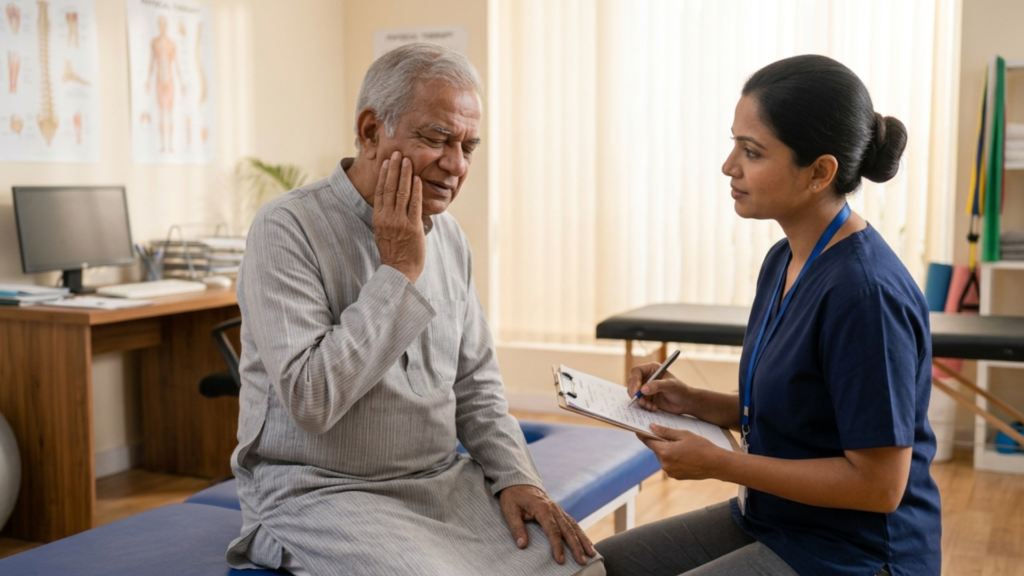
A clicking sound when you open your mouth. Jaw pain that flares up after a long conversation or a big meal. A dull ache that seems to radiate up toward the ear or across the temple. Jaw pain — medically referred to when it involves the joint as temporomandibular joint dysfunction, or TMJ — is often dismissed for months because it doesn’t feel serious enough to bring up with a doctor, and people aren’t entirely sure whether it’s even something physiotherapy treats.
It is, and at Spine Act Physiotherapy, TMJ-related pain is one of the conditions where a fairly small number of targeted sessions can produce a disproportionately large improvement in day-to-day comfort — particularly because so many cases go untreated simply because people don’t realise help is available.
What Causes TMJ Dysfunction & Jaw Pain
The temporomandibular joint connects the jawbone to the skull, just in front of each ear, and it’s one of the most frequently used joints in the body — involved in talking, chewing, and swallowing throughout the day. Dysfunction here can stem from several sources: muscle tension around the jaw (often related to clenching or grinding, particularly during sleep or periods of stress), disc displacement within the joint itself, or arthritic changes in more longstanding cases.
What makes TMJ dysfunction particularly interesting from a physiotherapy perspective is how closely it’s connected to the neck and upper back. The muscles that control jaw movement share nerve pathways and functional relationships with the cervical spine, which is why TMJ pain so frequently coexists with neck tension, and why treating the jaw in isolation — without considering the neck — often produces incomplete results.
Signs You May Have TMJ Dysfunction
Common presentation
- Clicking, popping, or grinding when opening the mouth
- Jaw pain or fatigue while chewing
- Difficulty opening the mouth fully
- Headaches, often around the temples
- Ear-area pain without an actual ear infection
Worth assessing sooner
- The jaw locking in an open or closed position
- Significant, sudden loss of mouth opening
- Pain following facial trauma
- Symptoms significantly affecting eating or sleep
Why Choose Spine Act Physiotherapy for Jaw Pain Treatment in Greater Noida
A significant proportion of TMJ dysfunction is related to habits that people aren’t fully aware of — clenching the jaw during focused work or stressful moments, grinding teeth during sleep, or resting the chin on a hand in a way that puts asymmetric pressure on the joint. These habits, sustained over months, gradually overload the jaw muscles and joint structures.
This is part of why physiotherapy tends to be effective here — it addresses both the immediate muscle tension and the underlying movement patterns and habits that are sustaining the problem, rather than just managing the pain when it flares.
Our TMJ Treatment Approach — Manual Therapy & Jaw Exercises
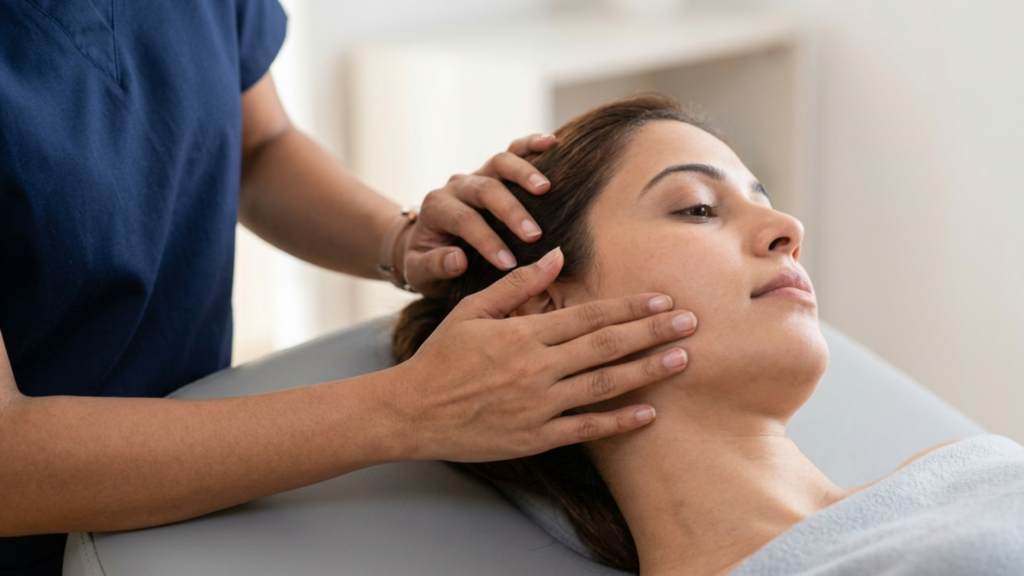
Manual therapy for jaw and surrounding muscles Targeted release work on the muscles around the jaw joint, which are often significantly tighter than people realise until they’re properly assessed.
Jaw mobility and coordination exercises Specific exercises to restore normal, symmetric jaw movement and improve the coordination between the muscles that open and close the mouth.
Cervical spine assessment and treatment Given the close relationship between the jaw and neck, addressing any coexisting neck tension or postural issues is often an essential part of resolving TMJ symptoms fully.
Deep Tissue Laser Therapy for acute flare-ups Can help settle inflammation and pain during particularly uncomfortable episodes, supporting more comfortable participation in the exercise programme.
Visit Our Physiotherapy Clinic in Beta 2, Greater Noida
The clinic is located at Beta 2, Greater Noida, within easy reach of Beta 1, Alpha 2, Knowledge Park, and Noida Extension. TMJ assessments here typically also review neck posture and movement, given how frequently the two are connected — something that’s easy to miss if the jaw is assessed entirely in isolation.
Other conditions treated at the clinic
Sciatica & Nerve Pain →Herniated Disc →Cervical Radiculopathy →Cervical Stenosis →Cervical Myelopathy →Frozen Shoulder →Myofascial Pain →Heel Pain / Plantar Fasciitis →Tennis Elbow →Golfer’s Elbow →Stroke Rehabilitation →Diabetic Neuropathy →Parkinson’s Disease →Bell’s Palsy →Spinal Cord Injury →Knee Pain →Runner’s Knee →Low Back Pain →Rotator Cuff / Shoulder →Vertigo & BPPV →Piriformis Syndrome →Post-Fracture Rehab →Shockwave Therapy →Spinal Decompression →All Services →
Frequently Asked Questions About TMJ Physiotherapy
Does physiotherapy actually help with jaw pain?
Yes — manual therapy, targeted jaw exercises, and addressing related neck tension are well-supported approaches for TMJ dysfunction, particularly for cases driven by muscle tension rather than significant structural joint changes.
Why does my jaw pain seem connected to my neck?
The muscles and nerve pathways controlling jaw movement are closely linked with the cervical spine, so tension or dysfunction in one area frequently affects the other. This is why a thorough TMJ assessment usually includes evaluating the neck as well.
Can TMJ pain be treated without a night guard or dental splint?
For many people, yes, particularly when muscle tension and movement patterns are the primary driver. That said, physiotherapy and dental management aren’t mutually exclusive — an assessment can clarify whether a combined approach would be more effective for your specific case.
What are the clinic timings?
Monday to Saturday, 8:00 AM to 8:30 PM. Closed Sunday. Contact the clinic or WhatsApp +91 92685 04629 to confirm availability.
How do I book an assessment?
Call or message on WhatsApp at +91 92685 04629, or get in touch through the website.
Book a Jaw Pain Assessment Near Beta 2, Greater Noida
Jaw pain doesn’t have to be something you just live with. A relatively focused course of physiotherapy, addressing both the jaw and its relationship with the neck, resolves a meaningful proportion of TMJ cases without needing more invasive intervention.
Learn more about Dr. Yash Pratap or reach out to Spine Act Physiotherapy to arrange an assessment.
Beta 2, Greater Noida · +91 92685 04629 · WhatsApp · Contact · Services