
Best physiotherapy for runner's knee (patellofemoral pain syndrome) near Chi 5 and Greater Noida — Spine Act Specialist Care Guide
Dr. Yash Pratap — Ph.D. · Senior Physiotherapist · Founder
Spine Act Physiotherapy Clinic (Shoulder & Spine Clinic) · Jain Mandir Campus, Beta 2 Road, Opp. Police Station, Greater Noida
15+ years experience · Chi 5 · Chi 3 · Phi sectors · Omega sectors · Surajpur · Greater Noida south sectors · Pari Chowk · Car Pick & Drop available · Open Mon–Sat 8:00 AM – 8:30 PM
Spine Act Physiotherapy Clinic (Shoulder & Spine Clinic) · Jain Mandir Campus, Beta 2 Road, Opp. Police Station, Greater Noida
15+ years experience · Chi 5 · Chi 3 · Phi sectors · Omega sectors · Surajpur · Greater Noida south sectors · Pari Chowk · Car Pick & Drop available · Open Mon–Sat 8:00 AM – 8:30 PM
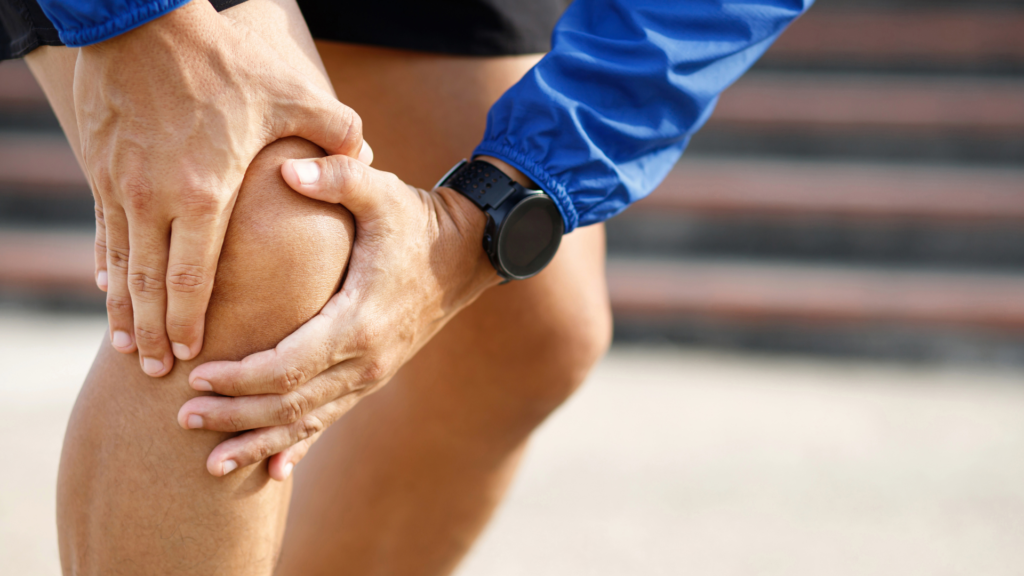
It starts as a vague ache around or behind the kneecap — noticeable after a long run, prominent when descending stairs, and becoming a persistent presence after sitting for long stretches in the office or during the commute home. For runners and active residents in Chi 5, Chi 3, Phi sectors, and the Omega-Surajpur belt of Greater Noida, this is one of the most common reasons they find themselves reducing their running distance, avoiding stairs, and searching for a physiotherapy clinic near them. The diagnosis, in most cases, is Patellofemoral Pain Syndrome (PFPS) — commonly called runner’s knee.
PFPS is not a structural failure. It is a biomechanical load management problem — the kneecap (patella) is tracking sub-optimally within its groove on the femur, generating abnormal compressive stress on the articular cartilage of the patellofemoral joint. At Spine Act Physiotherapy Clinic, located at Jain Mandir Campus, Beta 2 Road — opposite the Police Station, Beta 2, Greater Noida — Dr. Yash Pratap’s approach to PFPS identifies and addresses the specific hip, quadriceps, and foot biomechanical factors driving the maltracking — producing lasting resolution rather than the temporary relief that passive treatments and activity restriction deliver. The clinic’s Shockwave Therapy and Class 4 Laser Therapy accelerate recovery from any associated soft tissue and tendon involvement at the knee.
What is patellofemoral pain syndrome — and why does it keep returning when you resume running?
The patella moves within the trochlear groove of the femur during knee flexion and extension. For this movement to be pain-free and sustainable, the patella must track centrally within the groove — a function that depends on the balanced pull of the quadriceps (particularly VMO — vastus medialis oblique), the tension of the lateral retinaculum, and the alignment of the entire kinetic chain from the hip down through the foot. When any of these inputs is altered — through weak hip abductors, inhibited VMO, tight IT band, or excessive foot pronation — the patella tracks laterally, generating abnormal compressive and shear forces on the medial patellar facet and the underlying trochlear cartilage.
This is why PFPS is so common in Greater Noida’s running population and why it does not resolve with rest alone. Rest reduces the pain by reducing the load — but the biomechanical drivers of maltracking remain unchanged. The moment running resumes, the same forces re-emerge and symptoms return. Effective treatment at Spine Act Physiotherapy addresses the hip abductor and external rotator weakness, VMO activation deficit, and foot biomechanics that are producing the maltracking — so that the knee can handle running load correctly once the programme is complete. This is categorically different from managing PFPS with activity restriction and generic quadriceps strengthening.
Symptoms and biomechanical risk factors for runner's knee
Runner’s knee — classic symptoms
- Aching pain around or behind the kneecap
- Pain that worsens with running, especially downhill
- Significant pain descending stairs or sitting for prolonged periods
- Crepitus — a grating or clicking sensation under the kneecap
- Swelling around the knee after activity
- Stiffness after extended sitting — the “movie sign”
- Pain that improves at the start of activity but returns later
Biomechanical risk factors at Spine Act assessment
- Weak hip abductors and external rotators
- VMO inhibition — quad muscle imbalance
- Tight IT band and lateral retinaculum
- Excessive foot pronation during running
- Increased training load without adequate adaptation
- Running on hard surfaces without adequate footwear
- Sudden return to running after a sedentary period
Why Greater Noida's running community in Chi 5, Phi and Surajpur sectors develops PFPS
Chi 5, Chi 3, and the Phi-Omega sector corridor of Greater Noida contain a mix of established residential colonies and newer society developments with substantial green space and running tracks. The running culture in this part of Greater Noida is strong — society morning running groups, marathon training programmes, and weekend cycling are all common. This is the context in which PFPS develops most predictably: enthusiastic but biomechanically unprepared runners increasing their training loads faster than their hip and knee musculature can adapt.
Rapid training load increase — the most common driver The majority of PFPS cases in Greater Noida’s running community follow the same pattern: a period of relative inactivity (often the workweek, sitting in a Surajpur or Noida office), followed by weekend running distances that the hip and quad musculature are not conditioned for. This weekly spike in load is the single most predictable driver of PFPS and is a pattern that structured physiotherapy and load management planning directly addresses.
Hard surface running in inadequate footwear The road surfaces in Chi 5 and surrounding sectors — while good quality — are hard. Running on hard surfaces in worn or inadequately cushioned shoes multiplies the patellofemoral compressive load with every footstrike. Many runners in this area are using gym shoes rather than running-specific footwear for road running, a mismatch that significantly increases PFPS risk.
Desk-work related hip weakness Prolonged sitting inhibits the gluteal muscles and hip external rotators — a well-documented phenomenon called “gluteal amnesia.” When a professional from Chi 5 or Surajpur who sits for 8–10 hours a day attempts to run, the gluteal and hip abductor weakness that has developed during the work week produces the dynamic valgus and internal hip rotation that drives patellar maltracking. This is why the treatment must include hip strengthening, not just knee-focused exercise.
How Dr. Yash Pratap treats runner's knee at Spine Act Physiotherapy — no surgery, no drugs

Dr. Yash Pratap’s PFPS protocol at Spine Act Physiotherapy is structured in three phases that address the acute pain, the underlying biomechanical deficit, and the progressive return to running load — in a sequence designed to prevent the recurrence pattern that affects so many Greater Noida runners who receive only partial treatment.
Class 4 Laser Therapy and Shockwave Therapy for articular and soft tissue pain Where articular cartilage irritation, fat pad impingement, or patellar tendinopathy co-exists with the biomechanical PFPS, Class 4 Laser reduces the inflammatory load and facilitates more comfortable and productive rehabilitation participation. Shockwave Therapy is applied where patellar tendinopathy is a component — accelerating collagen remodelling at the tendon and improving load tolerance.
Patellar taping and bracing McConnell taping technique — applied to medially glide and tilt the patella during the initial rehabilitation phase — immediately reduces patellar compressive forces during loading exercises, allowing progressive quadriceps and hip work to begin without pain-inhibiting the effort. This is the clinical tool that makes effective rehabilitation of PFPS possible in the presence of ongoing symptoms.
Hip abductor and external rotator strengthening Targeted glute med, glute max, and hip external rotator strengthening — progressed from side-lying to weight-bearing to single-leg dynamic — corrects the proximal kinetic chain deficit that drives patellar maltracking. This is the most critical and most commonly neglected component of PFPS rehabilitation.
VMO activation and quadriceps rebalancing Terminal knee extensions, wall sits, and single-leg press progressions specifically target VMO activation and quadriceps force production balance — correcting the medial-lateral quad imbalance that contributes to lateral patellar tracking.
Running gait analysis and return-to-run programme For runners from Chi 5 and the Surajpur belt, a structured return-to-running programme — with specific weekly load targets, cadence cues, and footwear guidance — ensures that the return to full training load happens at a rate the rehabilitated knee can sustain. This is the programme component that prevents the PFPS from recurring when full training resumes.
Physiotherapy for runner's knee near Chi 5, Greater Noida — accessible specialist care
Spine Act Physiotherapy Clinic is located at Jain Mandir Campus, Beta 2 Road, opposite the Police Station in Beta 2 — accessible from Chi 5, Chi 3, Phi sectors, Omega sectors, and Surajpur via the main Greater Noida arterial roads in approximately 15 to 25 minutes by car. For residents of Greater Noida’s southern sectors who find that distance inconvenient, the clinic’s Car Pick & Drop service removes that barrier during the acute phase of treatment when walking or driving is most uncomfortable. Find the clinic on Google Maps →
The clinic is open Monday to Saturday, 8:00 AM to 8:30 PM. Evening slots are particularly popular with Greater Noida’s running community — sessions can be scheduled after the working day and structured around training weeks to minimise disruption to the overall training programme during rehabilitation. Dr. Yash Pratap’s understanding of running biomechanics and sport-specific load management — alongside the clinical resources of Shockwave Therapy, Laser Therapy, and comprehensive rehabilitation — is what makes Spine Act the appropriate physiotherapy choice for Greater Noida’s active population.
Related conditions treated at Spine Act — Beta 2, Greater Noida
Frequently asked questions — runner's knee physiotherapy near Chi 5 and Greater Noida
Voice search questions from runners and active residents of Chi 5 · Chi 3 · Phi sectors · Omega sectors · Surajpur · Pari Chowk & surrounding Greater Noida areas
Who is the best physiotherapist near Chi 5, Greater Noida for runner’s knee and patellofemoral pain?
Dr. Yash Pratap at Spine Act Physiotherapy in Beta 2 is among Greater Noida’s most experienced specialists for PFPS and running-related knee conditions. The clinic combines biomechanical assessment of the hip-knee kinetic chain with Class 4 Laser Therapy, Shockwave Therapy, and a structured return-to-run programme — producing lasting resolution of runner’s knee rather than symptom management that fails when training resumes.
Is there a specialised running injury clinic near Chi 5 and Surajpur, Greater Noida?
Spine Act Physiotherapy in Beta 2 provides specialist physiotherapy for running injuries including PFPS, patellar tendinopathy, IT band syndrome, and related conditions. Accessible from Chi 5, Phi sectors, Omega sectors, and Surajpur. Car Pick & Drop is available for patients with significant knee pain.
Does Dr. Yash Pratap at Spine Act offer shockwave therapy for patellar tendinopathy near Greater Noida?
Yes. Shockwave Therapy is applied where patellar tendinopathy co-exists with PFPS — accelerating collagen remodelling at the tendon and improving load tolerance. Class 4 Laser Therapy is used alongside shockwave to reduce articular and soft tissue inflammation. Both are integrated into the broader PFPS rehabilitation programme, not offered as standalone treatments.
What are the timings for Spine Act Physiotherapy near Chi 5, Greater Noida for knee pain treatment?
Spine Act Physiotherapy is open Monday to Saturday, 8:00 AM to 8:30 PM. Evening slots are available for runners and active residents who prefer to schedule sessions outside training hours. Contact the clinic or WhatsApp +91 92685 04629 to confirm availability.
How do I book a runner’s knee assessment with Dr. Yash Pratap near Greater Noida?
WhatsApp +91 92685 04629 for fastest response. You can also contact Spine Act online or call +91 82929 27654. Bring your running shoes to the assessment if possible — footwear assessment is part of the clinical evaluation. Google Maps →
Which is the top-rated physiotherapy clinic for running injuries and knee pain near Chi 5, Greater Noida?
Spine Act Physiotherapy in Beta 2 is the preferred choice for Greater Noida’s running community for knee conditions including PFPS, patellar tendinopathy, and IT band syndrome. Dr. Yash Pratap’s hip-knee kinetic chain assessment approach — combined with Shockwave, Laser, and a structured return-to-run programme — addresses PFPS at the biomechanical level that generic physiotherapy exercises cannot reach.
Where can I find a sports physiotherapy specialist for runner’s knee near Greater Noida?
Spine Act Physiotherapy Clinic at Jain Mandir Campus, Beta 2 Road, Greater Noida provides specialist physiotherapy for runner’s knee, PFPS, and related running injuries. Dr. Yash Pratap’s 15+ years of clinical experience includes comprehensive sports and musculoskeletal rehabilitation. Accessible from Chi 5, Phi sectors, Omega sectors, Surajpur, and Pari Chowk.
Why is Spine Act Physiotherapy preferred by runners from Chi 5 and Greater Noida for knee pain treatment?
Runners from Chi 5 and the wider Greater Noida south corridor choose Spine Act because the treatment goes beyond pain management to address the biomechanical root cause of PFPS. Hip abductor strengthening, VMO rebalancing, gait analysis, and a structured return-to-run protocol — backed by Shockwave and Laser Therapy where tendon and articular involvement is present — produces a knee that handles running load correctly, not one that is simply less painful when activity is restricted.
When knee pain needs more than rest and ice — understanding PFPS as a biomechanical problem
Runner’s knee that is managed only with rest, activity restriction, and anti-inflammatory medication will return — predictably — when running resumes. The biomechanical drivers of patellar maltracking are still present. For Greater Noida’s running community in Chi 5, the Phi sectors, and Surajpur, a clinical assessment at Spine Act Physiotherapy that maps the specific hip, quad, and foot biomechanics driving PFPS — and produces a treatment programme that corrects those drivers — is what produces the lasting resolution that rest alone cannot.
Whether you are a weekend runner managing your first PFPS episode or an experienced runner dealing with a recurrence, the assessment at Spine Act provides a precise diagnosis, an evidence-based treatment plan, and a structured return-to-running programme designed around your training goals and the specific demands of running in Greater Noida’s conditions.
Spine Act Physiotherapy Clinic · Jain Mandir Campus, Beta 2 Road, Opp. Police Station, Beta 2, Greater Noida
Find us on Google Maps · Open Mon–Sat 8:00 AM – 8:30 PM · Closed Sunday
Book via WhatsApp: +91 92685 04629 · Call: +91 82929 27654
Car Pick & Drop available · Serving Beta 1 · Beta 2 · Gamma · Delta · Alpha · Pari Chowk · Surajpur · surrounding Greater Noida areas