
Best Tennis Elbow Treatment near Omaxe NRI City, Greater Noida: Expert Care at Spine Act Physiotherapy
Dr. Yash Pratap — Ph.D. · Senior Physiotherapist · Founder
Spine Act Physiotherapy Clinic (Shoulder & Spine Clinic), Beta 2, Greater Noida
15+ years experience · Serving Omaxe NRI City · Beta 1 · Beta 2 · Gamma · Alpha 1 · Jaypee Greens · Pari Chowk & surrounding Greater Noida areas · Car Pick & Drop available
Spine Act Physiotherapy Clinic (Shoulder & Spine Clinic), Beta 2, Greater Noida
15+ years experience · Serving Omaxe NRI City · Beta 1 · Beta 2 · Gamma · Alpha 1 · Jaypee Greens · Pari Chowk & surrounding Greater Noida areas · Car Pick & Drop available
You reach for your morning cup of chai and feel it — a sharp, nagging pain radiating from the outer edge of your elbow into your forearm. Gripping your laptop bag on the way to the Greater Noida Expressway, lifting groceries from the car, or simply shaking someone’s hand at the office: each ordinary action sends a familiar, unwelcome signal. If this is your daily reality, you are very likely dealing with lateral epicondylitis — more commonly known as tennis elbow — one of the most underestimated and frequently undertreated musculoskeletal conditions affecting working adults in Greater Noida today.
For residents of Omaxe NRI City and the wider Alpha, Beta, and Gamma sector belt, this condition is more prevalent than most people realise. The combination of long desk hours, heavy commutes, gym training without adequate warm-up, and the physical demands of household management in large residential townships creates exactly the pattern of forearm overuse that produces tennis elbow — regardless of whether you have ever held a tennis racquet.
At Spine Act Physiotherapy Clinic in Beta 2, Greater Noida — a short drive from Omaxe NRI City and Pari Chowk — Dr. Yash Pratap treats tennis elbow using a protocol that goes well beyond the standard advice of rest and a compression strap. His approach combines Shockwave Therapy, Class 4 Deep Tissue Laser Therapy, and structured rehabilitation to address what tennis elbow actually is at its core: a degenerative tendon condition that requires regenerative treatment, not just symptom management.
What is tennis elbow — and why does it keep coming back?
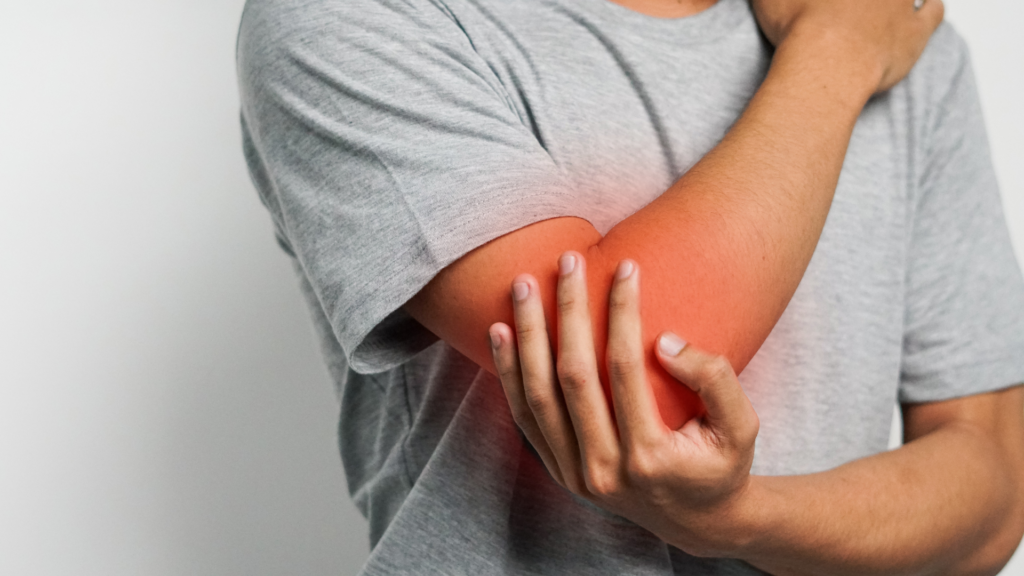
Tennis elbow is not a sports injury in the way most people imagine. The medical term — lateral epicondylitis — refers to a condition involving the extensor tendons of the forearm, specifically at the point where they attach to the lateral epicondyle: the bony prominence on the outer side of the elbow. When these tendons are subjected to repetitive gripping, twisting, or lifting — particularly in activities that extend the wrist against resistance — microscopic tears develop at the tendon attachment.
The body’s initial response is inflammation, which is why many patients experience temporary relief from anti-inflammatory medication or ice packs. The problem is structural: when the repetitive stress continues and the tendon never receives adequate recovery time, it enters a state of chronic, low-grade degeneration. The tissue loses its normal collagen architecture, becomes less vascular, and progressively less capable of handling even routine loads — which is why patients find that activities as minor as turning a door handle or pouring a kettle become genuinely painful.
This distinction between acute inflammation and chronic tendinopathy is the central reason most people’s tennis elbow does not resolve with rest alone. Once the condition has persisted beyond six to eight weeks, the tissue has changed at a structural level. It requires therapies that actively stimulate tissue repair and remodelling — not simply reduce inflammation. This is precisely what the advanced treatments at Spine Act Physiotherapy are designed to deliver.
Symptoms and warning signs: recognising tennis elbow early
Classic symptoms
- Pain or burning on the outer side of the elbow
- Weak grip — difficulty holding cups, tools, or a steering wheel
- Pain that worsens with wrist extension or forearm rotation
- Tenderness directly over the lateral epicondyle on pressing
- Aching that radiates into the upper forearm during or after activity
- Stiffness in the elbow, especially first thing in the morning
Warning signs — see a physiotherapist
- Elbow pain lasting more than 6–8 weeks despite rest
- Pain spreading into the wrist or up toward the shoulder
- Tingling or numbness in the hand or fingers
- Grip strength noticeably weaker than the other hand
- Previous diagnosis or steroid injection with no lasting improvement
- Pain severe enough to disrupt sleep or daily work
Why residents of Omaxe NRI City and Greater Noida are particularly prone to tennis elbow
Tennis elbow is driven by repetitive forearm overuse — and the lifestyle common to Greater Noida’s working residential population, including Omaxe NRI City residents, creates several converging risk factors that most patients are entirely unaware of. Understanding them is important because it explains both why the condition develops and, critically, why it returns if the underlying causes are not addressed in treatment.
Prolonged laptop and keyboard use during long desk hours A significant proportion of Omaxe NRI City residents are IT professionals, financial analysts, architects, or corporate executives who spend 7 to 10 hours daily at a keyboard. Sustained typing with the wrist in extension — the standard laptop posture — creates continuous, low-level loading on the extensor tendons at exactly the point where tennis elbow develops. Over weeks and months, this load accumulates into tendon micro-damage without any single identifiable injury event.
Gym training without adequate forearm conditioning Greater Noida’s newer townships, including Omaxe NRI City, have well-equipped gyms in their societies and nearby fitness centres. Weight training — particularly barbell rows, deadlifts, pull-downs, and exercises involving repeated gripping under load — places high demand on the lateral elbow tendons. Without proper warm-up, progressive loading, and forearm strengthening as part of the programme, gym-going residents are at significantly elevated risk. Weekend-warrior patterns — sedentary Monday to Friday, intense gym sessions on Saturday and Sunday — are especially problematic.
Long commutes and driving grip The daily commute from Omaxe NRI City to Noida, Delhi, or other Greater Noida hubs — often 45 to 90 minutes each way on the Greater Noida Expressway — requires sustained gripping of a steering wheel. This sustained, low-intensity grip sustains static forearm muscle activation for extended periods, a pattern that accelerates extensor tendon fatigue and eventual breakdown. Add vibration from road surfaces and the picture becomes clearer.
Household and maintenance activity in large residences Omaxe NRI City’s spacious homes involve a level of physical upkeep — gardening, carrying heavy groceries, domestic repairs — that residents often underestimate. Wringing mops, using screwdrivers, lifting heavy pots, or even extended use of smartphones for scrolling and typing all involve forearm extensor loading. The transition from a predominantly desk-based week to physically active household management on weekends mirrors the problematic loading pattern described above.
Bat and racquet sports without proper warm-up Cricket is played across the open grounds in and around the Omaxe and Alpha sector communities. Badminton courts are a staple of Greater Noida’s township societies. Batting, throwing, and racquet sports all involve exactly the wrist extension and forearm rotation patterns that stress the lateral elbow tendons — particularly for players who are deconditioned through the working week and play at full intensity without preparation on weekends.
How Dr. Yash Pratap treats tennis elbow at Spine Act Physiotherapy — the non-surgical, non-drug approach
Dr. Yash Pratap’s clinical approach at Spine Act Physiotherapy is founded on a principle that changes how tennis elbow is treated: chronic elbow tendinopathy is a tissue degeneration problem, not a pain problem. Suppressing pain with medication or steroid injections leaves the degenerated tendon tissue unchanged — which is why the pain returns the moment activity resumes. The treatment protocol therefore focuses on regenerating the tendon tissue itself, while correcting the biomechanical patterns that produced the condition.
This is what separates Spine Act’s technology and rehabilitation facility from general physiotherapy setups in Greater Noida. For residents of Omaxe NRI City who have already tried rest, bracing, and short-course treatments without lasting results, the clinic’s combination of regenerative and rehabilitative therapy is where the difference becomes apparent.
Shockwave therapy for tennis elbow — Spine Act's evidence-based regenerative treatment
Shockwave Therapy has the strongest evidence base of any non-surgical treatment for chronic lateral epicondylitis in current physiotherapy and sports medicine literature. At Spine Act Beta 2, radial pressure wave technology (RPW) delivers high-energy acoustic pulses into the degenerated extensor tendon tissue at the lateral epicondyle — the specific site of pathology in tennis elbow.
These acoustic pulses accomplish three things simultaneously: they disrupt calcific deposits that sometimes develop in longstanding tendinopathy; they stimulate neovascularisation — the formation of new blood vessels in poorly supplied tendon tissue, which is a key driver of healing in chronic tendinopathies; and they trigger a controlled acute healing response that restarts the repair process the chronic condition has blocked. The result is genuine structural tissue regeneration, not temporary pain relief.
For Omaxe NRI City residents and working professionals across Greater Noida who need to maintain function — cannot afford to rest an arm for weeks — shockwave therapy is particularly valuable because it works with the body’s own healing biology rather than masking symptoms pharmacologically. A standard protocol at Spine Act involves three to six sessions over as many weeks. Many patients report a meaningful reduction in grip pain and improved daily function from session two onward. Read the full Shockwave Therapy overview →
Class 4 deep tissue laser therapy for elbow tendinopathy
Class 4 Deep Tissue Laser Therapy uses a process called photobiomodulation — delivering specific light wavelengths at therapeutic intensities deep into the target tissue — to accelerate cellular repair and reduce biochemical inflammation. At the power levels of Class 4 (significantly higher than the lower-power Class 3 units common in basic physiotherapy setups), the laser effect penetrates to the depth of the extensor tendon insertion itself.
For tennis elbow specifically, Class 4 laser therapy reduces the concentration of inflammatory cytokines in the tendon tissue, stimulates collagen synthesis to repair the structural micro-tears at the lateral epicondyle attachment, and activates endogenous endorphin pathways that provide genuine, non-pharmacological pain relief during recovery. When used in combination with shockwave therapy, the two modalities address complementary aspects of the healing deficit in chronic tendinopathy — producing outcomes that neither achieves as effectively in isolation.
Sessions at Spine Act Beta 2 are completely pain-free, require no preparation, and typically take 10–15 minutes — a practical advantage for Greater Noida’s working population who need appointments that fit into a working day or can be completed before or after office hours. Read the full Class 4 Laser Therapy overview →
Eccentric rehabilitation, manual therapy and ergonomic correction
Regenerative therapy restarts healing. Rehabilitation prevents recurrence. Both are non-negotiable components of Dr. Yash Pratap’s protocol at Spine Act Physiotherapy, and the absence of structured rehabilitation is the most common reason tennis elbow returns after treatment elsewhere.
Eccentric loading and progressive tendon strengthening Eccentric wrist extension and forearm strengthening exercises — the intervention with the strongest evidence base in tendinopathy management — are introduced at the appropriate stage of healing to rebuild load tolerance in the extensor tendon. Progressive loading is carefully calibrated to the patient’s current tendon capacity, avoiding re-aggravation while steadily increasing the tendon’s ability to handle the demands of work, sport, and daily life.
Forearm and wrist stretching protocols Specific, load-appropriate stretching of the wrist extensor group — performed in sequences that do not re-stress the healing tissue — progressively restores tissue length and reduces the resting tension that sustains the condition. Patients are given a clear home programme alongside clinic sessions, which is essential for accelerating recovery for working adults who cannot attend clinic every day.
Manual therapy and elbow joint mobilisation Restricted mobility in the radiohumeral joint and restricted neural mobility in the radial nerve — both frequently overlooked contributors to lateral elbow pain — are assessed and treated with targeted manual therapy techniques. Restoring joint and neural mobility reduces the mechanical load concentration at the lateral epicondyle during forearm movement, improving both pain and function.
Workstation ergonomics and activity modification For Omaxe NRI City’s desk-based professionals, Dr. Yash Pratap provides specific, practical guidance on keyboard positioning, mouse use, wrist posture, and desk setup — the factors that sustain the underlying cause of the condition through every working day. Activity modification advice for gym training, driving, and sport is also provided, tailored to the patient’s actual life demands. This connects to the broader approach Spine Act takes in its comprehensive rehabilitation programmes.
Physiotherapy for tennis elbow near Omaxe NRI City, Greater Noida — accessible specialist care
Spine Act Physiotherapy is located in Beta 2, Greater Noida — directly accessible from Omaxe NRI City via the Alpha 1/Alpha 2 corridor and the Pari Chowk junction. Residents of Omaxe NRI City, Jaypee Greens, and the Alpha sector townships reach the clinic in under 10 to 15 minutes without navigating the congestion of Noida’s inner roads. Ample parking is available directly in front of the facility.
For patients whose elbow pain has become severe enough that driving is uncomfortable, Spine Act’s Car Pick & Drop service removes the final barrier between you and treatment. The recognition that getting to the clinic should never be the reason recovery is delayed is one of the practical commitments that distinguish Spine Act from general physiotherapy setups in the region.
The clinic operates from 9:00 AM to 8:00 PM, with appointment slots available before standard office hours and in the evening — designed around Greater Noida’s commuting workforce. Dr. Yash Pratap’s 15 years of clinical experience — including previous roles as Head of Department at Kailash Hospital in Greater Noida and as Consultant Physiotherapist at Arogya Physiotherapy Center — are directly reflected in the precision of assessment and the quality of treatment at every session. For residents of Omaxe NRI City and surrounding areas, access to this level of specialist physiotherapy without travelling to Delhi or central Noida is genuinely uncommon.
Related conditions treated at Spine Act Beta 2
Frequently asked questions — tennis elbow physiotherapy near Omaxe NRI City, Greater Noida
Voice search and near-me questions from residents across Omaxe NRI City · Alpha 1 · Alpha 2 · Jaypee Greens · Beta sectors & surrounding Greater Noida areas
Who is the best physiotherapist near Omaxe NRI City, Greater Noida for tennis elbow and lateral elbow pain?
Dr. Yash Pratap at Spine Act Physiotherapy Clinic in Beta 2 is one of Greater Noida’s most experienced specialists for tennis elbow and lateral epicondylitis. His Ph.D.-level clinical training, combined with 15+ years of experience in complex musculoskeletal conditions and access to Shockwave Therapy and Class 4 Laser — technologies most local clinics do not offer — makes Spine Act the specialist choice for Omaxe NRI City residents seeking definitive treatment rather than temporary relief.
Is there a tennis elbow specialist clinic within easy reach of Omaxe NRI City, Greater Noida?
Spine Act Physiotherapy in Beta 2 is accessible from Omaxe NRI City in 10–15 minutes via the Alpha sector roads and Pari Chowk. The clinic is one of very few facilities in Greater Noida equipped with both Shockwave Therapy and Class 4 Laser Therapy — the two most clinically supported treatments for chronic tennis elbow. Car Pick & Drop service is available for patients with significant pain.
Does Spine Act Physiotherapy offer Shockwave Therapy for tennis elbow near Greater Noida?
Yes. Shockwave Therapy is one of Spine Act’s core treatment modalities for tennis elbow, particularly for cases where rest, bracing, and steroid injections have not produced lasting relief. It is non-invasive, requires no anaesthesia, and typically involves three to six weekly sessions. It works by stimulating genuine tendon tissue regeneration at the lateral epicondyle, rather than suppressing pain temporarily.
Can physiotherapy cure tennis elbow without surgery or steroid injections?
For the overwhelming majority of tennis elbow cases — including longstanding, chronic cases — surgery is not required. At Spine Act Physiotherapy, the combination of Shockwave Therapy and Class 4 Laser Therapy to regenerate the tendon tissue, combined with structured eccentric rehabilitation to restore load tolerance, resolves tennis elbow without surgery or drugs in most patients. The clinic’s founding philosophy — No Surgery, No Drugs, No Pain — is a clinical commitment that directly applies to lateral epicondylitis treatment.
What are the timings for Spine Act Physiotherapy in Beta 2 near Omaxe NRI City?
Spine Act Physiotherapy Clinic is open from 9:00 AM to 8:00 PM, seven days a week. Early morning and evening slots accommodate working professionals from Omaxe NRI City and the wider Greater Noida area. Contact the clinic directly to confirm appointment availability for tennis elbow assessment and treatment.
How do I book an appointment with Dr. Yash Pratap for tennis elbow treatment near Greater Noida?
The fastest way to book at Spine Act Physiotherapy is via WhatsApp on +91 92685 04629. You can also contact the clinic online or call +91 82929 27654. For Omaxe NRI City residents with significant pain, ask about the Car Pick & Drop service when you call. The first session always includes a full clinical assessment before any treatment begins.
My elbow pain came from using a keyboard at work — is that tennis elbow? Can physiotherapy help?
Yes — lateral epicondylitis caused by computer use is one of the most common presentations seen at Spine Act Physiotherapy. The condition does not require sport to develop; repetitive keyboard use with the wrist in extension creates exactly the extensor tendon loading pattern that produces tennis elbow. Dr. Yash Pratap’s protocol includes both regenerative treatment and specific workstation ergonomic guidance to address the condition at its source and prevent recurrence during continued desk work.
Why choose Spine Act Physiotherapy over other clinics near Omaxe NRI City for tennis elbow?
Four reasons consistently bring Omaxe NRI City and Greater Noida residents to Spine Act for tennis elbow: the specialist technology (Shockwave + Laser) most local clinics lack; Dr. Yash Pratap’s Ph.D. clinical expertise in complex tendinopathy; the practical accessibility — Beta 2 location, extended 9 AM–8 PM hours, Car Pick & Drop; and the clinic’s commitment to resolving the condition fully, not managing it indefinitely. Patients who have lived with tennis elbow for months, tried bracing and injections, and not found lasting relief consistently report that Spine Act’s regenerative + rehabilitative protocol is what finally works.
Don't let elbow pain become a permanent part of your day — when to act
Tennis elbow is not a condition that resolves reliably on its own once it has become chronic. Left unaddressed, it progressively disrupts grip, wrist function, and eventually shoulder mechanics as the body compensates for a painful elbow with altered movement patterns. The working professionals and active residents of Omaxe NRI City who recover fully are those who treat the condition as the tendon-degeneration problem it is — with the right therapies, applied in the right sequence, by a clinician who understands both the biomechanics and the biology.
If your elbow pain has persisted beyond a few weeks, has returned after previous treatment, or is interfering with your work, gym routine, or daily life around Greater Noida — a clinical assessment at Spine Act Physiotherapy is the right starting point. The assessment identifies what is specifically driving your lateral elbow pain and maps out a treatment protocol designed for your situation — not a generic one.
Dr. Yash Pratap’s full message to patients explains the thinking behind the Spine Act approach — why No Surgery, No Drugs, No Pain is not a slogan but a clinical methodology. Reading it before your first appointment gives you a clearer picture of what effective, evidence-based physiotherapy actually looks like.
Spine Act Physiotherapy Clinic · Beta 2, Greater Noida · Near Pari Chowk · Accessible from Omaxe NRI City · Alpha 1 · Alpha 2 · Jaypee Greens
Open 9:00 AM – 8:00 PM · Book appointment via WhatsApp · Call: +91 82929 27654
Serving Omaxe NRI City · Beta 1 · Beta 2 · Gamma · Alpha 1 · Alpha 2 · Jaypee Greens & surrounding Greater Noida areas · Car Pick & Drop available