
Best physiotherapy treatment for scoliosis beta 2: Spineact physiotherapy clinic is the best physiotherapy clinic in greater noida.
Treatment for scoliosis: Dr. Yash Pratap and his dedicated unit are best for treating conditions like scoliosis and other spinal conditions.
Scoliosis is a three-dimensional malformation of the vertebral column that is characterized by a lateral curve of the spine. Postural scoliosis is classified as either structural or nonstructural, Spinal Decompression is one of the effective advanced technology machines that helps in the promotion of healing and allows effective recovery if combined with appropriate rehabilitative measures. There are two types of structural scoliosis: idiopathic (cause known) and non-idiopathic (cause unknown). Scoliosis can affect 2% to 13.6% of people.
Scoliosis Causes
It’s unclear what causes scoliosis in the first place. The occurrence of this condition is influenced by several factors, including growth, hormonal dysfunction, bone mineral density changes, abnormalities in body part tissue, aberrant platelet calmodulin levels, biomechanical factors, and abnormalities in the central nervous system.
To find a human body fit rehabilitation and treatment protocol, a variety of treatment options are used on patients. This is necessary because every patient is unique and has many variables working at once, such as patient severity, age, type of curve, degree of torsion, and others.
Both a primary and a secondary curvature are present in scoliosis. There are convex and concave sides to every curve. Usually, the main curve is more rigid. A thorough awareness of the curve’s normal course and the repercussions of leaving it untreated is essential for the effective treatment of scoliosis. This needs to be balanced with an understanding that, depending on the kind of curve, there are many different natural histories rather than just one.
There could be multiple indicators that suggest you might have scoliosis.
Lateral curvature of the vertebrae
A slanting position
Elevating one shoulder above the other
Hanging clothes incorrectly
localized aching in the muscles
localized sore ligaments
The primary concern in cases of progressive severe scoliosis is declining lung function.
About 23% of patients with idiopathic scoliosis in one research reported having back pain when they were first diagnosed. An underlying comorbidity such as spondylolisthesis, syringomyelia, tethered cord, herniated disc, or spinal malignancy was discovered in 10% of these patients. It is recommended to conduct a comprehensive assessment for a different cause of pain in a patient with idiopathic scoliosis who is experiencing more than minor back discomfort.
How a physio therapist can help in your scoliosis recovery?
Physiotherapy is one of the beneficial treatment options used by patients and proven by a wide spectrum of medical research on rehabilitation that helps in managing pain, in parallel improves individual mobility, and prevents further bending of spinal lateral curvature, also long-term physio therapy can help in restoring lost functional movements and other congruent motion abilities. If the professional is qualified enough to hold strong learning experience surely the focus is to strengthen and condition the body structures and further train them in certain ways to improve brain neuroplasticity. While planning for treatment environmental and other contextual factors are also one of the considerable points that a therapist emphasizes because our human lives revolve around the natural system that plays a vital role in sustaining living forms and shaping them to embrace changes that add factors of capabilities, challenges, living situations, other personal and professional factors. You can get it treated by Dr. Yash Pratap one of the best physical therapist in greater noida.
Diagnosis of scoliosis is simple -
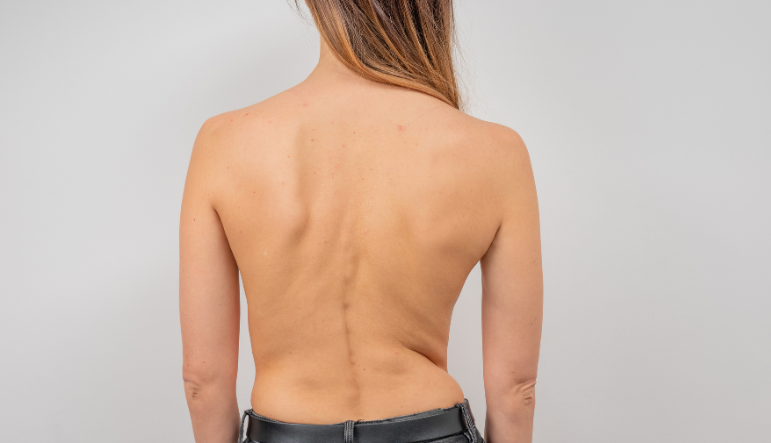
In most cases, your healthcare provider can simply look at your back and notice a lateral curvature. Bending forward at the waist can confirm the diagnosis, as a lateral curvature of the spine also causes a rotation of the spine. This will make your ribs on one side of your back more prominent while bending. This “rib hump” is a tell-tale sign of scoliosis.
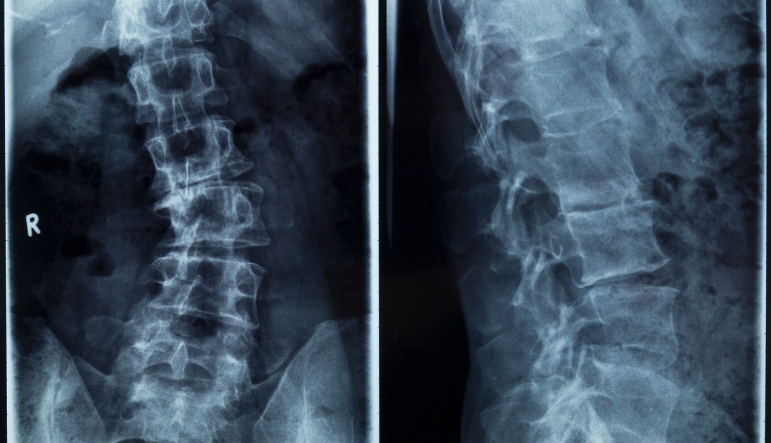
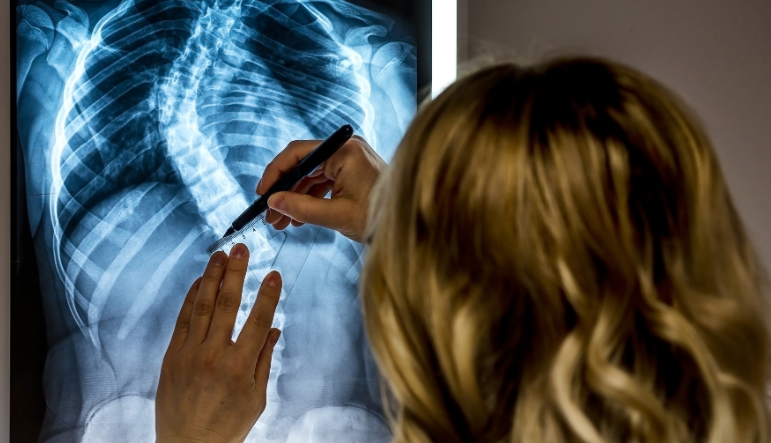
If your healthcare provider suspects scoliosis, they will likely take an X-ray. This picture will show the position of the bones of your spine, and the degree of curvature can be measured. Some people have an “S” curve; their lower lumbar spine curves one way, and their middle thoracic curves in the opposite direction. Others have a “C” curve where the lumbar and thoracic spine curve in one direction together.
As your spine curves laterally, the vertebra rotates slightly. Many patients with scoliosis also have straightening of the thoracic spine. Your healthcare provider can use the X-ray to determine the type of curve you have and the degree of the curvature, known as the Cobb angle. Cobb angles may range from 10 degrees (mild) to more than 60 degrees (severe).
Treatment
Exercise Protocol for Scoliosis :
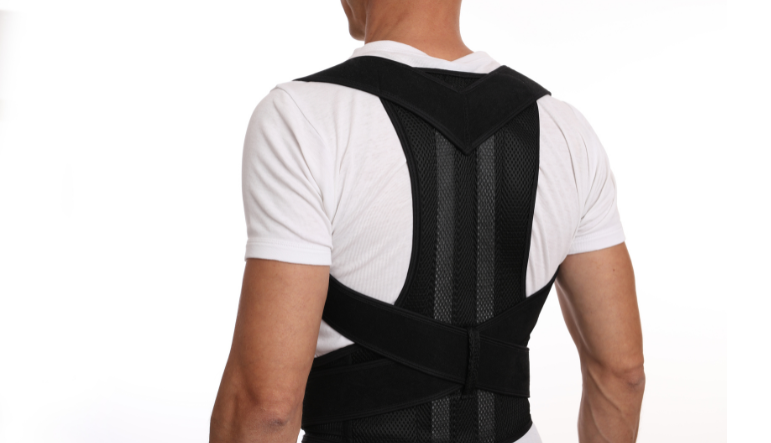
Exercises of the following general kinds are frequently advised for those with scoliosis:
- Exercises for Stretching: Stretching helps increase the range of motion and flexibility in the muscles around the spine. This can facilitate the performance of other exercises and aid in lessening pain and discomfort.
- Exercises for Strengthening: Exercises for Strengthening aid in the development of back and core muscle strength. This can lessen the chance that the curve will continue to grow while also supporting the spine. Exercises like planks and abs are frequently recommended.
- Exercises for balance and coordination can help to increase general stability and lower the chance of falling. This is crucial for those who have scoliosis since their curved spines may make them more likely to fall.
- Breathing exercises: breathing exercises for scoliosis can support optimal chest mobility and enhance lung function.
- Exercises aimed at improving posture and alignment of the body are called postural exercises, and they are essential for managing scoliosis.
- Yoga: By lowering stress, enhancing flexibility and strength, and reducing discomfort, yoga can help persons with scoliosis live better lives. Look for a certified yoga teacher with scoliosis-related teaching experience.
- Aerobic Exercise: Walking and swimming are examples of low-impact aerobic exercises that can help strengthen bones and muscles, enhance cardiovascular health, lessen discomfort and inflammation, and lower the risk of scoliosis problems.
- Resistance training: enhancing general strength and posture with small weights or resistance bands can be beneficial.
PSSE: Physiotherapeutic scoliosis-specific exercises combined with conservative treatment resulted in an 88.5% success rate in a group of 95 adolescents with adolescent idiopathic scoliosis who were at the peak of their growth and a relatively high risk of progression. Merely 6.4% and 1.1% of the subjects, respectively, had passed over 40° and 50% at the end of the treatment. The likelihood of advancement and reaching the surgical indication range can be significantly reduced with nonoperative treatment using a brace and scoliosis-specific exercises, provided that good compliance and in-brace correction are maintained. Our treatment approach at Spineact assesses adolescents with scoliosis for potential future disease progression and better quality of life along with improving function, trunk rotation, mental health, and appearance.
Best Exercises for Scoliosis
Exercise 1: Side planks
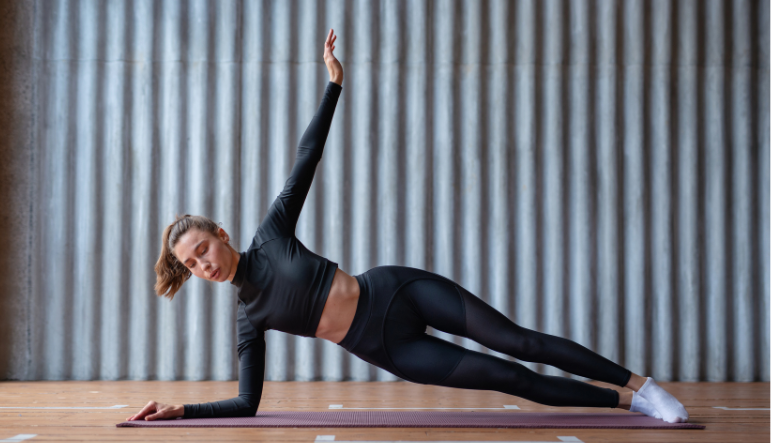
- The neutral spine posture is preserved with the aid of side planks. Additionally, it can strengthen your core and muscles, enhancing your body’s overall strength. It is necessary for you to:
- To perform a plank, place your left hand in the center of the exercise, move your weight to it, stack your ankles, and raise your hips.
- Hold your right hand above your head or place it on your hip, for additional support, you might lower your left knee to the ground.
- Hold this pose by contracting your side body, glutes, and abdominals, and ensure that your torso is in an upright position from the top of your skull to your heels.
- Look up at your hand or directly ahead of you, after holding this position for up to 30 seconds, switch to the opposite side.
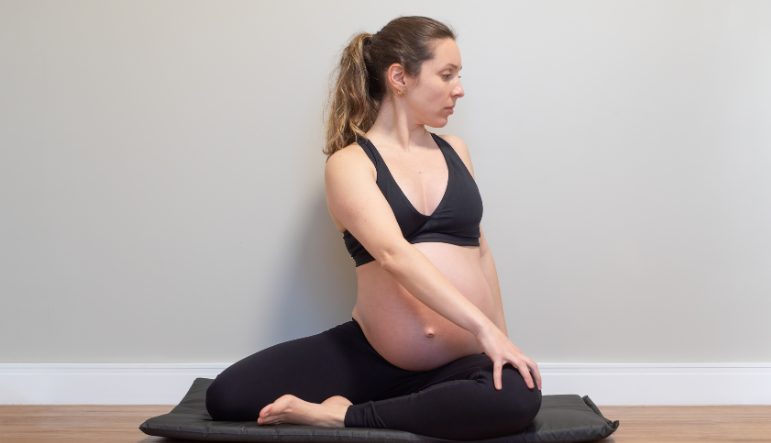
Exercise 2: Stretches for sitting rotation
- Use a mat to sit on the ground, and lay your left foot solely on the ground while crossing it over your right.
- Put your left arm behind your back to provide support turn your body to face your left leg.
- For a deep stretch, extend your left arm such that the elbow presses on your knee.
Turn to face your left shoulder, on the other side, repeat the same process.
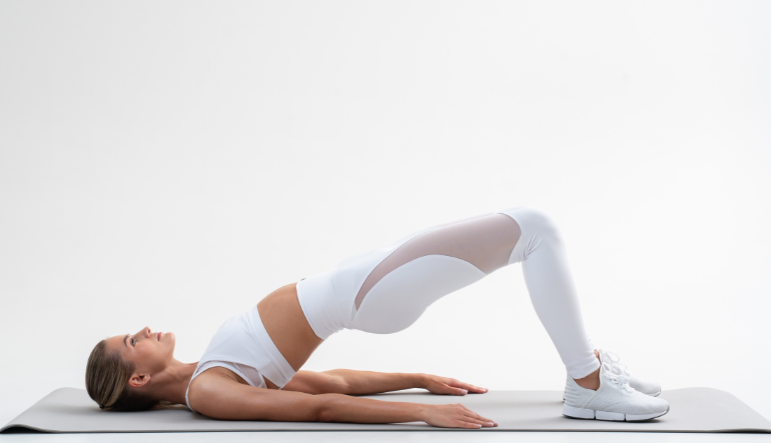
Exercise 3 : Exercise for pelvic tilt
- People with scoliosis may benefit from pelvic tilt exercises because they can assist in improving posture, stretch tight muscles, strengthen the hip and core muscles, and lessen pain.
- A person should be lying on their back with their legs bent and their feet flat on the ground to execute a pelvic tilt.
- Ensure that your lower back presses against the floor, tense your abdominal muscles, and raise your pelvis, release after five seconds of holding. Ten times over, repeat.
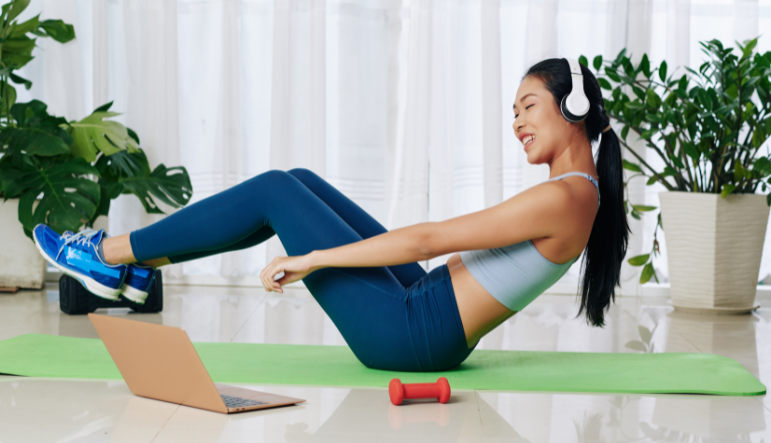
The rectus abdominis (abs), transverse abdominis (deep core muscles), and obliques are among the core muscles used during the double-leg abdominal press exercise. Although it is a very easy exercise to perform, maintaining good form can be difficult, the double-leg abdominal press is performed by doing the following:
- Place your feet flat on the floor and lie on your back with your legs bent.
- Your hands should be resting on your knees.
- By raising your belly button toward your spine, you can activate your core muscles.
- Lift your legs off the ground so that your knees are 90 degrees apart.
- Pull your knees toward your chest and press your hands against your knees while maintaining an engaged core, hold for a few minutes, then slowly bring your legs back to the starting position.
Do as many repetitions with proper form as you can, ranging from ten to fifteen.
Exercise 4 : Double-Leg Press-Ups for the Abs
Exercise 5 : Lower yourself and extend one arm.
- The starting position is standing and then stepping onto the small step or box.
- Lower the other leg to the floor while the knee is bent, throughout the fall, raise the arm as high as possible to the same side as the lower leg.
- As in the case where the right foot is positioned closer to the ground and the left arm is elevated. You shouldn’t perform this exercise on the other side.
Do the workout three times a day and ten times in a single session.
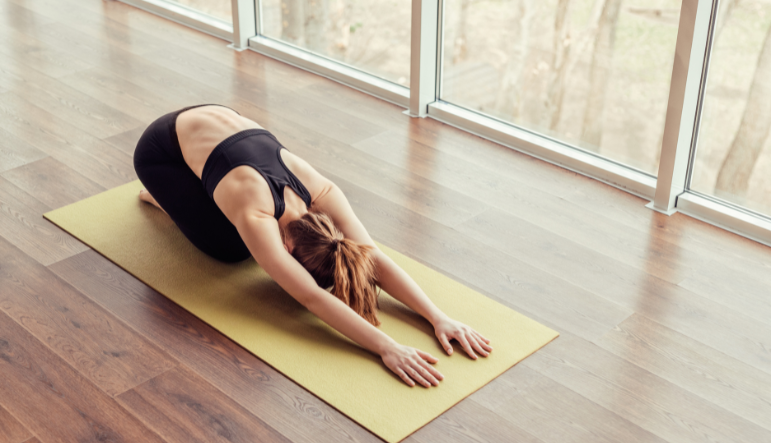
EXERCISE 6: Balasana, or Child's Pose
- A calming stance that helps open up the neck and back is the child’s pose. To perform the child’s position, kneel on the ground in front of them with your thighs hip-width apart.
- Fold forward, sitting backward on your heels with your forehead resting on the ground.
- With your hands facing down, extend your arms upwards.
Repeat 5–10 times while holding for 5–10 breaths.
Exercise 7: Scoliosis breathing exercises
Schroth workout for scoliosis:
A particular kind of physical therapy called Schroth exercises is intended to assist those having scoliosis.
- During respiratory action, the abdomen, thorax, and trunk all expand to increase the amount of air that is taken in by the lungs.
- Two sheets of pleural space connect the thoracic cage, inhalation muscles, and lung mass, which together make up two elastic systems that move in opposing directions during respiration.
- The deformation process of scoliosis causes structural alterations in the trunk. The trunk may diminish or become concave in certain areas, whereas it may protrude or become convex in others. Breathing is not working normally. The anomaly causes an imbalance in all the muscles of the trunk.
- “Scoliosis breathing,” a modified breathing pattern brought on by scoliosis-related asymmetry, may cause an increase in curvature and rotation. The muscles that descend the spine become out of balance on opposite sides as well.
- Schroth training teaches the patient to lengthen the muscles that are on the concave face of the spine and shorten the muscles on the convex side. Patients can learn to modify their breathing patterns to lessen the risk of curve advancement.
- During the “inhalation” part of the exercise, patients breathe into the concave side of their trunks, which helps expand collapsed regions. The patient isometrically contracts their muscles during the next phase, referred to as the “exhalation,” to stabilize and develop the surrounding muscles.
- Schroth exercises are designed to help people maintain a more erect posture by strengthening the muscles surrounding the spine.
See your physio therapist if Schroth exercises are appropriate for you if you have scoliosis.
The goals of Schroth’s exercises were to improve postural alignment and muscle symmetry.
inhaling through the concave side of the body, teaching you how to recognize your posture

Advantages of Schroth exercises
- Cobb angle dropped before skeletal formation.
- Curve’s delayed development
- Degeneration of the disc
- Improved posture appearance
- If there is discomfort, lessen or eliminate it, enhance of spinal stability and balance
- Increased lung function and chest enlargement
- Become more supple and robust.
How to Back In Control of Your Respiration due to Scoliosis?
This breathing technique is part of the Schroth method, a kind of scoliosis physical treatment. It aids in strengthening the muscles surrounding the spine and expanding the rib cage’s compressed sections.
Use these procedures to perform rotational angular breathing:
- With your feet flat on the floor and your knees bent, lie on your back on a hard surface.
- Place a cushion there to help support your head, with one hand, grasp your stomach, and with the other, your chest.
- As you gently and deeply inhale through your nose, air should fill your stomach. As you breathe in, your stomach should rise.
- Slowly turn your spine to face the side of your convex curve as you release the breath. As you rotate, your stomach and chest should move in tandem with your spine.
- With each exhale, keep breathing deeply and turn your spine. Hold each turn for ten to fifteen seconds.
On the opposite side, repeat steps 3-5, repeat ten to fifteen times on each side.
Advice:
- Throughout the workout, keep your shoulders down and your neck relaxed.
Keep your breathing slow and deep in mind.
- Don’t try to force your spine to rotate. Throughout the exercise, if you experience any pain, stop.
- To support your spine, insert a folded towel or foam roller beneath your convex curve.
- It is advisable to receive instruction in rotating angular breathing from a certified Schroth therapist if you are unfamiliar with it. They can assist you in making sure you are performing the activity safely and correctly.
Breathing diaphragmatically
This breathing technique expands the lungs and draws in air by contracting the diaphragm, a muscle situated beneath the lungs. To perform diaphragmatic breathing, grasp your chest with one hand and your stomach with the other. As you inhale, your chest should remain stationary as your stomach rises. When you exhale, your stomach should fall and your chest should remain stationary.